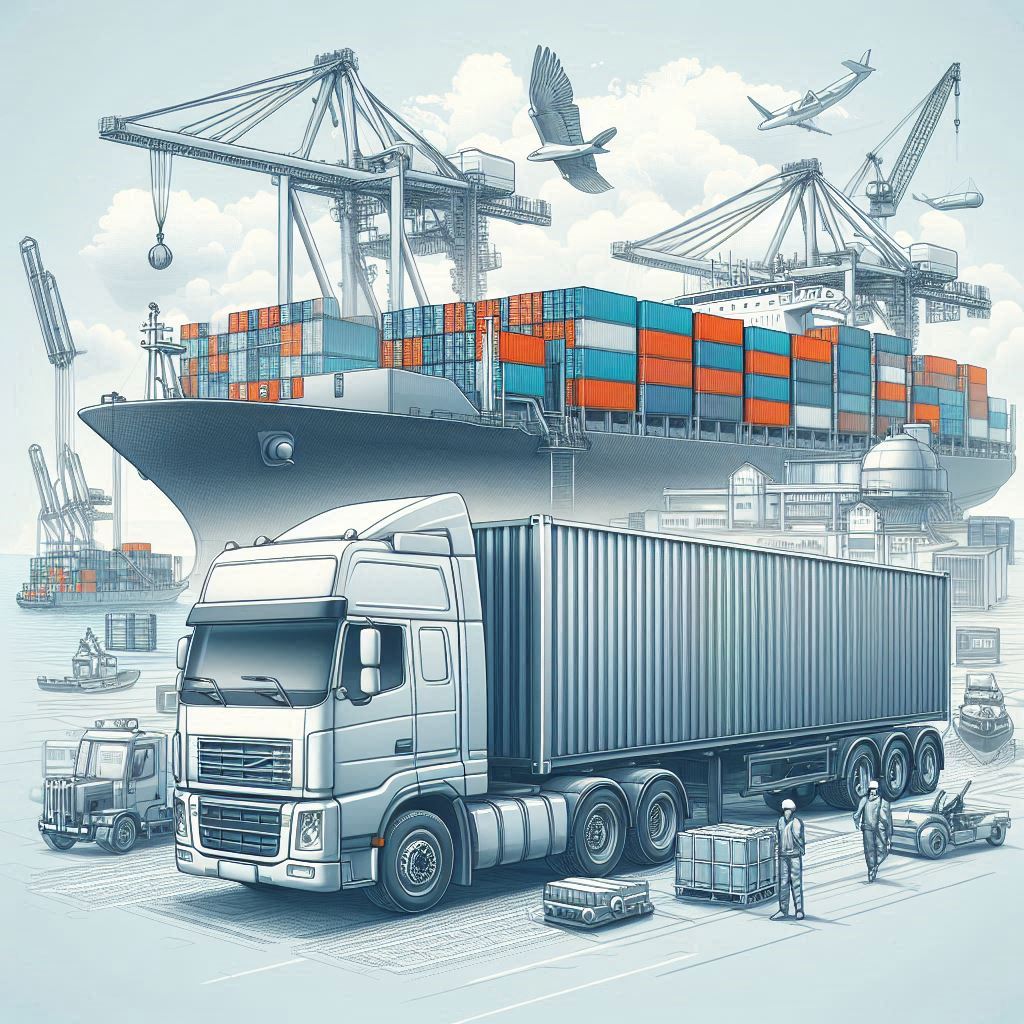
The trucking industry is the backbone of the global economy, responsible for the majority of freight transportation across land. Truck transports cover over 70% of all freight transportation, signifying their critical role in supply chains and commerce.
From delivering essential goods like food and medicine to moving industrial products and raw materials, trucks ensure that every product is delivered to consumers and businesses efficiently and timely.
The trucking industry’s significance and its contributions are not only to the stabilization of the economy but also to its impact on daily life, facilitating the seamless flow of goods that society relies on.
Introduction to the Current Landscape and Its Challenges
The trucking industry today faces a multifaceted landscape which brings out different opportunities and challenges for truck drivers.
The development of advanced technology within the trucking industry is revolutionizing the way fleets are managed and operated, with innovations such as autonomous trucks, telematics, and electric vehicles leading the charge in the trucking industry.
These advancements also bring challenges related to implementation costs, regulatory compliance, and the need for infrastructure development.
Development within the industry, it deals with the regulatory changes that are aimed at improving safety and reducing environmental impact in the trucking and transportation industry.
The changing regulations such as emissions standards and hours of service regulations require the industry to adapt to these changes quickly.
Sometimes economic factors like fluctuating fuel prices, freight rates, and global trade also add another layer of complexity, influencing operational costs and profitability.

European workforce in the trucking industry also presents the most significant challenges, with a persistent shortage of drivers exacerbated by an aging population of truck drivers within the industry and the expectation of high turnover rates.
Efforts to attract and retain drivers from all over the world, coupled with training initiatives, are crucial to sustaining the industry’s labor force.
Moreover, the growing focus on sustainability is driving trucking industries to adopt greener practices and technologies, in an effort to reduce their carbon footprint amidst increasing environmental awareness.
This blog will focus on the new emerging trends within the trucking industry in 2024.
Technological Trends in the Trucking Industry
Autonomous Trucks:
The trucking industry has shown a surge with the introduction of autonomous trucks in the industry. Autonomous trucks have made a revolutionary development within the industry with their technological features such as AI algorithms, sensors, and cameras allowing them to navigate the surroundings accurately.
Advanced navigation and real-time insights into the road help drivers navigate the road safely, without any hurdles.
Autonomous truck serves as one of the beneficiary developments within the trucking industry. Autonomous trucks can reduce accident causes and minimize human error which may be caused by drivers who are sick or feeling fatigued during the journey.
Advanced sensors and AI installed in these trucks can take quick action when there are any kind of hurdles on the road, hence improving overall efficiency and road safety.

Telematics and IoT (Internet of Things):
The integration of the Internet of Things (IoT) is yet another transformative technological development in the trucking industry. The telematics systems, which combine GPS, onboard insights, and IoT sensors, provide real-time data on vehicle location, performance, and driver behavior. This data is invaluable for fleet managers aiming to optimize operations and improve efficiency.
By using this technology, fleet managers can track and monitor the vehicle’s location, which helps them to ensure timely delivery and improve route planning for truck drivers. Moreover, IoT sensors can help drivers by predicting the maintenance needs of the Truck’s health, and help in preventing breakdowns during the journey.
Telematics can help in tracking driver’s behavior, providing insights on into speeding of vehicles, harsh breaking, or any other behaviour that can cause risk to safety. This information can be used by fleet managers or higher authorities to train and educate drivers about road safety.
Data received from the Telematics system can also help in identifying any inefficiency in fleet operations such as fuel consumption or leaving the vehicle idle for excess time, this helps fleet managers to make decisions for improving driver’s efficiency during the journey.
Electric and Hybrid Trucks:
Electric and Hybrid trucks are the newest trending vehicles in the trucking industry that are gaining attraction for their alternative fuel options in comparison to traditional diesel-powered vehicles.
The advanced battery technology installed in these electric vehicles such as increased energy density makes these electric vehicles more beneficial for long-haul operations.
The first and foremost benefit of these electric and hybrid vehicles is that they help in reducing greenhouse gas emissions which is a threat to the environment like traditional diesel trucks used to cause. Adopting these vehicles supports sustainability to the environment, making the environment cleaner and greener.
These trucks also have lower operating costs due to reduced fuel expenses as compared to diesel trucks. Though the initial cost of electric trucks can affect the pocket of truck drivers or the trucking companies but overall lifespan cost of these trucks is particularly less.

Changing Regulations
Emission Standards:
EU regulation 2024 stated to focus on the sustainability of the environment, due to higher pollution rates and the release of greenhouse gases caused by trucks and other heavy-duty vehicles.
This concern regarding the environment and the need to combat pollution and sudden climatic changes have resulted in taking strict steps that have led trucking companies and transportation industries to adhere to these regulations which resulted in opting for options like green trucking,
which includes using Electric trucks and hybrid trucks which uses alternative fuel option and other greener transportation practices can help in a greener and cleaner environment.
Hours of Service Regulations (HOS):
Hours of Services regulations govern the working hours of truck drivers and other heavy-duty vehicle drivers to ensure that they are getting the proper amount of rest so that there will be no issues or accidents that can be caused by driver fatigue.
These updates in the EU regulations promote safety on the road not only for truck drivers but also for fellow drivers on the road.
In these HOS regulations drivers are allowed to take 30-minute breaks which allows them to be satisfied with on-duty, non-driving time. The drivers are allowed to be on duty for up to 14 hours, which can extend the driving radius to 150 air miles.
The HOS regulations provide more flexibility for drivers to manage their schedules and resting periods during the journey, specifically if it is long-haul.
This ensures that drivers are getting proper resting periods during the journey and promotes safety on the road for drivers and fellow drivers on the road.

Safety Regulations:
Safety regulation is one such regulation that will continuously evolve not only in the transportation or trucking sector but also in every sector as safety is foremost for everyone. I
n the transportation sector, it addresses emerging risks and improves overall safety standards by educating and training truck drivers about all the safety requirements to be followed during the journey, be it for vehicles or truck drivers.
The Enhanced Safety Protocols
ELD (Electronic Logging Devices): These devices were installed in the vehicles to ensure that drivers are following HOS guidelines, which can help in reducing the situation of driver fatigue or stress due to long-haul operations.
Automatic Emergency Breaks (AEB): This system is increasingly required on new trucks to prevent collision with other vehicles.
Lane Departure Warning System: This system encourages and mandates to prevention of accidents that can be caused by sudden lane departures.
The trucking industry is navigating a landscape of these changing regulations that are designed to promote safety, sustainability, and efficiency. While these regulations may impose cost factors and operational changes, with that they also drive innovation and improvements that ultimately benefit the industry, the environment, and public safety.

Economic Factors
Fuel Prices:
Fuel is one of the important aspects of the trucking industry, especially for traditional diesel vehicles. The fuel prices plays an important role in determining the operational cost for the trucking industry. Fluctuations in fuel prices can impact profitability and affect everything from transportation expenses to consumer prices for goods.
Fuel prices are volatile and are often influenced by factors such as geopolitical tensions, supply and demand dynamics, and global economic conditions.
These factors result in rising fuel prices directly which increase operating costs for trucking companies, and eventually, this leads to higher transportation expenses.
Companies have started investing in fuel-efficient technologies and practices, such as aerodynamic truck designs, driver training for fuel-efficient driving, and alternative fuels, to mitigate the impact of fuel price fluctuations.

Freight Rate:
Freight rates, the prices charged for transportation goods are most commonly affected by economic factors which include demands of the supply chain, fuel prices, and changing market conditions.
The high demand for freights is due to the strong consumer spending on e-commerce products which has also resulted in an increase in e-commerce activity, global trade has led to high demands for the transportation of goods and cargo through freight, which results in increasing rates of freight.
With the economy expected to continue its recovery and with the increase in consumer spending due to the rise of e-commerce activity, freight, and heavy-duty vehicle demand is likely to remain strong, supporting freight rate increases.
Changes in regulations, such as emissions standards and hours of service rules, could affect operating costs and ultimately impact freight rates.
Sustainability Efforts
Green Initiatives In the Trucking Industry:
Alternative Fuels: Many trucking and transportation companies are adopting alternative fuels such as natural gas, biodiesel, and electric-powered trucks. These alternative fuel options produce fewer emissions compared to traditional diesel trucks which contributes to cleaner air and reduced carbon emissions.
Hybrid and Electric Vehicles: The adoption of hybrid and electric vehicles is increasing in the trucking industry Electric vehicles (EVs) produce zero tailpipe emissions, offering a significant reduction in greenhouse gas emissions.
Aerodynamic Designs: Truck manufacturers are also incorporating aerodynamic designs into their vehicles to improve fuel efficiency.

Carbon Footprint Reduction:
Route Optimization: Utilization of advanced route optimization software helps trucking companies and drivers to minimize the distance traveled by planning for the route without any hurdles (road brokerage, traffic congestions, etc.) and reduces fuel consumption. By identifying the most efficient routes, companies can lower emissions while improving operational efficiency.
Vehicle Maintenance: Regular maintenance of trucks is important to consider by truck drivers and proper tire inflation can improve fuel efficiency and reduce emissions. Well-maintained vehicles operate more efficiently, resulting in lower carbon emissions per mile.
Load Optimization: Optimizing freight loads to maximize efficiency can reduce the number of trucks needed for transportation, resulting in fewer emissions per ton-mile. Technologies like load-matching software help identify opportunities for consolidation and minimize empty miles.
Conclusion
In conclusion, the trucking industry in 2024 is experiencing a profound transformation driven by technological advancements, changing regulations, economic factors, and sustainability efforts. These factors are shaping the landscape of the industry, presenting both challenges and opportunities for truck drivers, fleet managers, and stakeholders alike.
These emerging trends are adopted by the transportation industry and truck drivers. The knowledge and ability to adapt to these changing trends are important for truck drivers who are coming from different countries with different ethnicities hired by recruitment agencies.
The recruitment of truck drivers by agencies like Skillbee is to reduce the scarcity of truck drivers in Europe. The recruitment agency trains and makes their candidates aware of the European driving requirements and skills and hires skilled drivers who can adapt to European trucking cultures and understand these trends efficiently.
Technological advancements such as autonomous trucks, telematics, and electric vehicles are revolutionizing fleet management and operations. These innovations enhance safety, efficiency, and sustainability, while also posing challenges related to implementation costs and regulatory compliance.
Changing regulations, particularly focused on emissions standards and hours of service, are driving the industry towards greener practices and improved safety standards.
While compliance with these regulations may require investments and operational adjustments, they ultimately contribute to a safer and more sustainable trucking ecosystem.
Economic factors like fuel prices and freight rates continue to influence operational costs and profitability in the industry.
However, investments in fuel-efficient technologies and alternative fuels are helping mitigate the impact of fuel price fluctuations and support sustainability efforts.
Sustainability initiatives are gaining momentum within the trucking industry, with a growing focus on reducing carbon footprint through alternative fuels, aerodynamic designs, and route optimization. These efforts not only contribute to environmental conservation but also improve operational efficiency and reduce costs.
In navigating this dynamic landscape, collaboration among industry stakeholders, government agencies, and technology providers is crucial.
By embracing innovation, adhering to regulations, and prioritizing sustainability, the trucking industry can continue to play a vital role in the global economy while ensuring safety, efficiency, and environmental responsibility for years to come.
 +91 73 6009 6009 (India)
 contact@skillbee.com
Leave a Reply