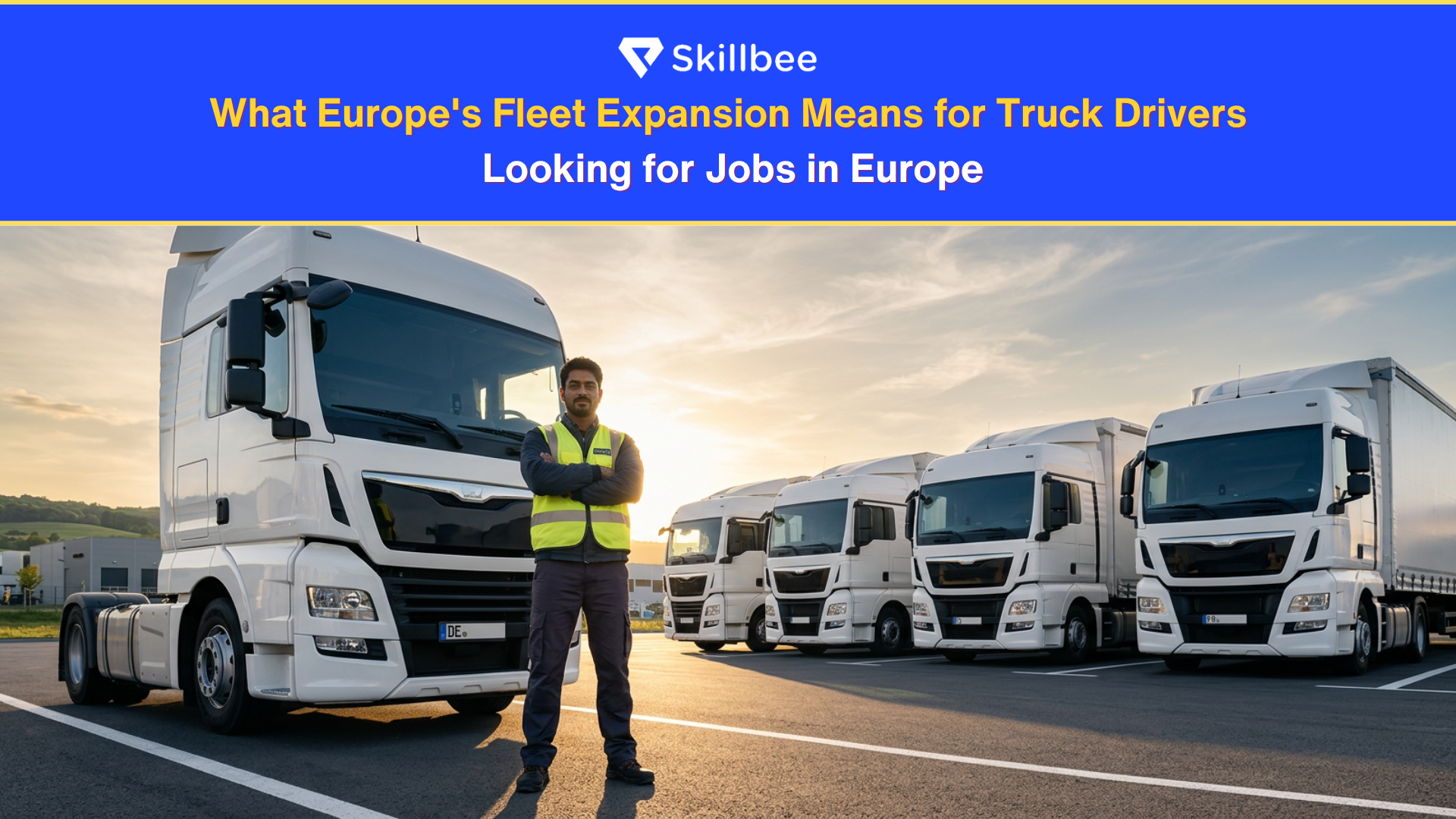
European truck driver jobs are growing as Europe’s logistics industry expands its fleets to meet rising freight demand, booming e-commerce, and increasing cross-border trade. Every new truck requires a qualified driver, making fleet expansion a major driver of recruitment and creating more opportunities for skilled professional drivers across Europe.
For experienced truck drivers, Europe’s fleet expansion is creating more international career opportunities. Employers are actively hiring qualified drivers and offering competitive salaries, stable jobs, and attractive benefits to meet growing demand.
In this blog, you’ll discover why European logistics companies are expanding their fleets, which countries currently offer the strongest job opportunities, the salaries and benefits drivers can expect, the qualifications and documents commonly required, and the practical steps international drivers can take to build a successful career in Europe’s fast-growing transport industry.
Why Are European Logistics Companies Expanding Their Fleets?

Europe’s logistics industry is experiencing sustained growth, prompting transport companies to expand and modernise their fleets to meet evolving market demands. Driven by increasing freight volumes, booming e-commerce, stronger cross-border trade, and the need for faster deliveries, fleet expansion has become a strategic priority across the continent. This growth is also creating more European truck driver jobs, as every new vehicle requires a qualified professional to keep supply chains moving.
Growing Freight Volumes
Freight movement across Europe continues to rise as industries such as manufacturing, construction, healthcare, agriculture, and retail expand their operations. Businesses rely on efficient transportation to move goods on schedule, encouraging logistics companies to increase fleet capacity. As fleets grow, European truck driver jobs continue to increase to support higher freight volumes.
Rising E-commerce and Retail Demand
The rapid growth of online shopping has transformed the logistics industry. Consumers expect faster deliveries, while retailers require efficient warehouse replenishment and last-mile distribution. To meet these demands, transport companies are expanding their fleets, creating more European truck driver jobs across regional and long-haul operations.
Growth in Cross-Border Transport
Europe’s connected transport network allows goods to move efficiently between countries. As international road freight continues to grow, logistics providers are adding more vehicles to serve cross-border routes. This expansion is driving demand for European truck driver jobs, especially for experienced long-haul and international drivers.
Fleet Modernisation and Sustainability
Fleet expansion is not only about adding more trucks but also replacing older vehicles with modern, fuel-efficient models. New trucks improve safety, reduce emissions, and lower operating costs while helping companies meet environmental regulations. Modern fleets also create more European truck driver jobs as transport companies expand their operations.
Expanding Customer Networks
As logistics providers win new contracts and enter additional markets, they require greater transport capacity. Larger fleets allow companies to serve more customers and operate more delivery routes, creating additional European truck driver jobs across Europe.
Demand for Faster Deliveries
Speed has become a key competitive advantage in logistics. To reduce transit times and handle higher shipment volumes, transport companies need more vehicles and qualified drivers. As a result, demand for European truck driver jobs continues to grow across Europe’s logistics industry.
What This Means for Professional Truck Drivers
For experienced truck drivers, Europe’s fleet expansion translates directly into growing career opportunities. Every new truck added to a company’s fleet requires a qualified driver, and many employers are actively recruiting international professionals to address ongoing driver shortages. As fleets continue to grow, drivers can benefit from increased job availability, competitive salaries, stable employment, and opportunities to build long-term careers in Europe’s thriving transport industry.
How Fleet Expansion Is Creating More European Truck Driver Jobs

As European logistics companies continue to expand their fleets, European truck driver jobs are increasing across the continent. Every new truck requires a skilled professional to operate it safely, efficiently, and in compliance with transport regulations. As a result, fleet expansion is creating more opportunities for experienced drivers seeking international careers.
Another major factor driving European truck driver jobs is the expansion of transport networks. Logistics companies are serving more customers, opening new distribution centres, and managing larger freight volumes across multiple countries. To maintain reliable delivery schedules and support cross-border operations, employers are continuously hiring qualified drivers to strengthen their workforce and address ongoing driver shortages.
High-Demand Truck Driving Roles
Fleet expansion is creating European truck driver jobs across a wide range of transport segments, giving drivers with different skills and experience the opportunity to find roles that match their expertise.
- International Long-Haul Drivers: Among the most in-demand European truck driver jobs, these roles involve transporting goods between European countries over long distances.
- Regional Truck Drivers: These European truck driver jobs focus on shorter routes connecting factories, warehouses, ports, and distribution centres to keep regional supply chains moving efficiently.
- Refrigerated Transport Drivers: Growing demand in the food, pharmaceutical, and healthcare sectors has increased European truck driver jobs for drivers experienced in operating temperature-controlled vehicles.
- Tanker and Specialised Vehicle Drivers: Industries such as chemicals, construction, fuel, and energy offer specialised European truck driver jobs for qualified drivers who can safely operate these vehicles while meeting strict regulations.
Why Experienced Drivers Have an Advantage

Employers place a high value on experienced drivers who can adapt quickly to European operations. Professionals with heavy vehicle driving experience, a strong safety record, and expertise in long-distance transport have a competitive advantage when applying for European Truck Driver Jobs.
Employers also prefer drivers who are familiar with:
- Digital tachographs and driving-hour regulations
- Cargo securing and load safety procedures
- International freight documentation
- Cross-border transport operations
- European road safety and compliance requirements
These skills help drivers integrate into operations more quickly, improve workplace safety, and increase their chances of securing European truck driver jobs with leading logistics companies.te into operations more quickly and contribute to safer, more efficient transport services.
A Growing Career Opportunity
For professional truck drivers, Europe’s fleet expansion represents far more than an increase in the number of vehicles on the road. It reflects sustained investment in the transport sector and a growing need for skilled professionals who can keep supply chains moving efficiently.
As logistics companies continue to expand their operations across Europe, qualified drivers are likely to benefit from increased job availability, competitive salaries, long-term employment opportunities, and the chance to build rewarding international careers in one of the world’s most dynamic logistics markets.
Why CE Licence Holders Are in High Demand
A CE licence is one of the most sought-after qualifications for drivers pursuing European truck driver jobs. It allows drivers to operate heavy commercial vehicles with trailers or semi-trailers, making it a key requirement for long-haul and international freight transport. As most cross-border cargo is moved using articulated trucks, employers actively recruit drivers with a valid CE licence.
However, holding a CE licence alone is not enough. Logistics companies also value practical experience operating articulated trucks, as experienced drivers can handle heavy loads, navigate long-distance routes, and adapt quickly to different road conditions with minimal training. Knowledge of digital tachographs and European driving-hour regulations is another important advantage, helping drivers perform efficiently and improve their chances of securing European truck driver jobs.
International trailer drivers from India and Middle Eastern countries are increasingly recognised for their experience and professionalism. Many have years of experience transporting freight over long distances, operating heavy commercial vehicles, and working in demanding road conditions. As Europe continues to face a shortage of qualified drivers, employers are actively recruiting skilled international professionals for European truck driver jobs who meet licensing, experience, and work authorisation requirements.
A strong commitment to safety further strengthens a driver’s profile. Employers look for professionals who follow vehicle inspection procedures, secure cargo correctly, comply with transport regulations, and maintain a safe driving record. Combined with long-haul or cross-border driving experience, these qualities make experienced CE licence holders highly competitive for European truck driver jobs across Europe.
Salary Expectations for Truck Drivers in Europe

One of the biggest reasons professional drivers choose to work in Europe is the opportunity to earn competitive salaries while building a stable, long-term career. However, truck driver salaries vary depending on the country, employer, experience, and the type of work involved. Understanding these factors can help you evaluate job offers more effectively.
Country of Employment
The country where you work has a major impact on your earnings. Countries with larger logistics industries, higher living costs, or ongoing driver shortages often offer more competitive salaries and better employment benefits.
Driving Experience
Experienced drivers are highly valued by European employers. Those with several years of heavy commercial vehicle experience, particularly operating articulated trucks or handling international freight, often qualify for higher-paying roles and greater responsibilities.
Route Type
The type of routes you drive also affects your income. Long-haul and international transport roles generally offer higher pay than local or regional routes because they involve longer journeys, greater responsibility, and extended periods away from home. Drivers handling specialised cargo may also receive additional compensation.
Employer and Benefits
Salary packages differ from one logistics company to another. In addition to the base salary, many employers offer overtime pay, night-shift allowances, performance bonuses, paid leave, health insurance, accommodation support, pension contributions, and other employee benefits. Looking at the complete compensation package provides a better understanding of the job’s overall value.
Before accepting a job offer, carefully review the employment contract to understand the salary structure, working hours, allowances, benefits, and any deductions. Comparing the full package, not just the monthly salary, will help you choose the opportunity that best supports your long-term career goals.
Long-Haul Driving Opportunities Are Growing

As European logistics networks continue to expand, the demand for long-haul truck drivers is rising. Transport companies are moving larger volumes of goods across multiple countries, creating more opportunities for drivers who are comfortable with extended journeys and international freight operations. The continued growth of cross-border trade has made long-haul transport a key part of Europe’s supply chain.
Long-haul drivers play an essential role in ensuring goods are delivered safely and on time to warehouses, factories, retailers, and distribution centres. Employers value drivers who can manage long-distance routes, comply with driving-hour regulations, and maintain high safety standards while operating across different countries.
Depending on the employer, drivers may operate routes connecting countries such as Germany, France, the Netherlands, Belgium, Poland, Italy, and other European destinations. As logistics companies continue expanding their transport networks, experienced long-haul drivers with strong safety records and international driving experience can expect growing career opportunities across Europe.
Documents Required to Apply for Europe Truck Driver Jobs

Before applying for truck driver jobs in Europe, ensure your documents are complete and up to date. While the exact requirements vary by country, employer, and recruitment process, having the necessary paperwork ready can help speed up your application and relocation.
Essential Documents
- Valid passport with sufficient validity for visa processing and travel
- Heavy vehicle driving licence issued by your home country
- CE licence or proof of eligibility for licence conversion, where applicable
- Driver Qualification Card (CPC/DQC), if required by the employer or destination country
- Experience certificates from previous employers
- Employment records, such as appointment letters, relieving letters, or salary slips, if requested
- Proof of driving experience, including fleet or route details where available
- Police Clearance Certificate (PCC), if required
- Medical fitness certificate for commercial driving
- Work visa, work permit, or documents needed for the visa application process
- Recent passport-size photographs that meet visa requirements
- Employer-specific documents, such as application forms, driving assessment results, or other supporting documents
Keep Your Documents Organised
Maintain both digital and printed copies of all important documents. Scanned copies can be shared quickly with recruiters during the hiring process, while original documents and photocopies are often required during visa processing and after arriving in Europe.
Because documentation requirements vary by employer and destination country, always confirm the latest requirements before submitting your application. Being well prepared can make the recruitment, visa, and relocation process much smoother.
Skills That Can Improve Your Chances of Getting Hired

Holding the right licence and driving experience is important, but European employers also look for drivers with strong practical and professional skills. These abilities help drivers work safely, adapt to different transport environments, and build successful long-term careers.
Safe Driving Practices
Safety is a top priority for logistics companies. Employers value drivers who follow traffic rules, drive responsibly, and prioritise the safety of themselves, their cargo, and other road users.
Route Planning and Time Management
Efficient route planning helps reduce delays, improve fuel efficiency, and ensure on-time deliveries. Drivers who can use navigation systems, manage delivery schedules, and plan their journeys effectively are highly valued.
Vehicle Inspection and Cargo Securing
Regular pre-trip and post-trip vehicle inspections help identify potential issues before they become serious problems. Drivers should also know how to secure cargo properly to ensure safe transportation and prevent load movement during transit.
Digital Tachographs and Traffic Regulations
Knowledge of digital tachographs and European driving-hour regulations is essential for professional truck drivers. Employers also expect drivers to understand European road signs, speed limits, and commercial vehicle regulations to ensure safe and compliant operations.
Communication and Professionalism
Basic English communication skills can help drivers understand instructions, complete documentation, and communicate with dispatch teams and customers. Employers also value reliability, punctuality, honesty, and a professional attitude, as these qualities contribute to efficient operations and strong workplace relationships.
Adaptability
Working in Europe often requires drivers to adjust to new road conditions, technologies, weather, and workplace practices. Drivers who are flexible, willing to learn, and able to adapt to changing situations are better prepared to succeed in Europe’s fast-growing logistics industry.
Conclusion
Europe’s growing investment in fleet expansion is creating more opportunities than ever for skilled truck drivers. As logistics companies add new vehicles, expand cross-border operations, and strengthen their supply chains, the demand for qualified trailer drivers continues to rise. Drivers with the right experience, professional skills, and documentation are well positioned to build rewarding careers in Europe’s thriving transport industry.
However, securing a truck driving job in Europe involves more than finding an employer. It requires proper preparation, from meeting licence and documentation requirements to understanding European driving regulations and workplace expectations.
At Skillbee, we help simplify this journey by recruiting experienced trailer drivers from India, the Middle East, and South Africa for truck driver roles across Europe. Our end-to-end support includes English language training, Code 95 training for Indian drivers, left-hand driving training at our dedicated training centre, and complete assistance with visa applications, documentation, and relocation. By preparing drivers for both the recruitment process and life on European roads, we help them start their international careers with confidence.
 +91 73 6009 6009 (India)
 contact@skillbee.com
Leave a Reply