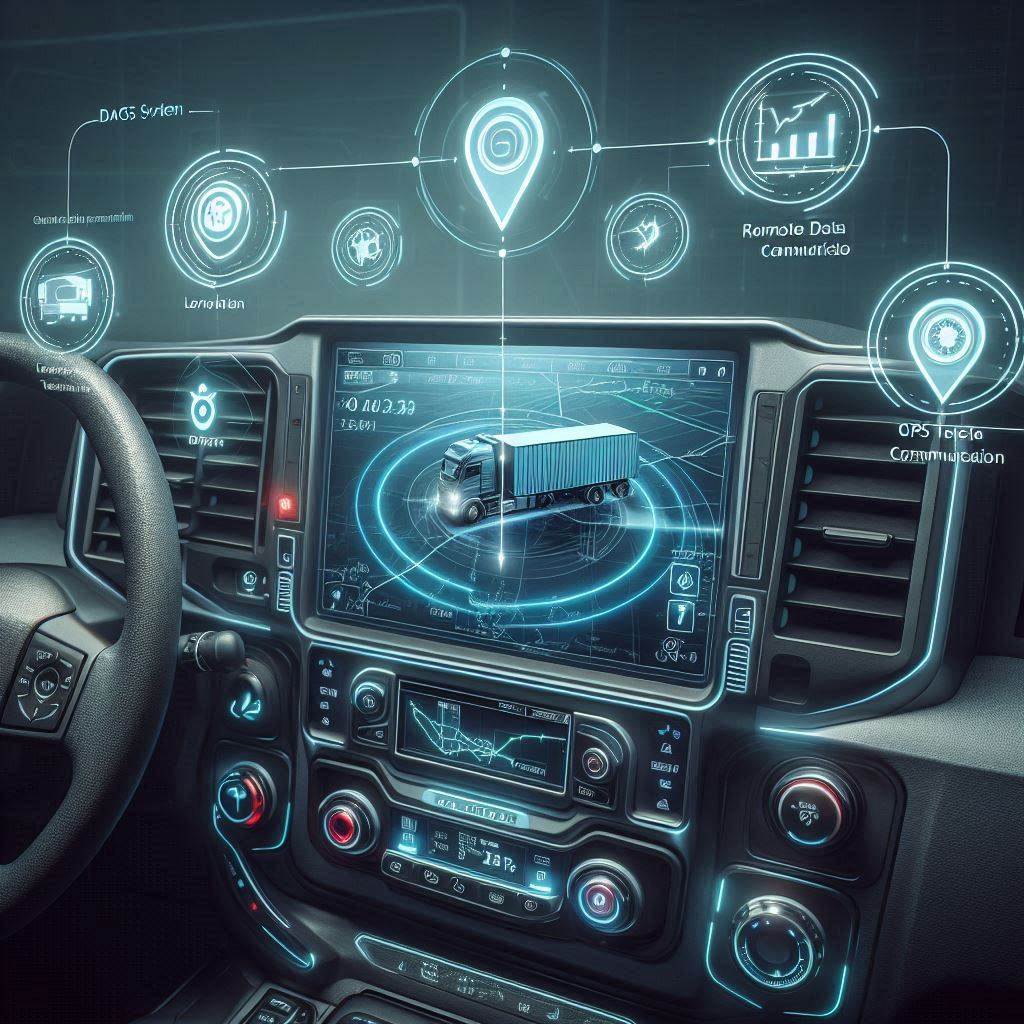
Tachographs are one of the most important devices that are used in the trucking industry to monitor and record a truck driver’s activities which includes driving time, speed, and the rest periods taken by truck drivers.
These devices were mainly introduced and are important for ensuring road safety and preventing driver fatigue during the trucking operation.
By accurately being able to truck driving hours and breaks, tachographs help enforce regulations that protect both the drivers’ well-being and public safety on the roads.
There are two main types of tachographs: analog and digital. Analog tachographs are usually use for the physical chart to record data, while the digital tachographs are mostly used to store the information electronically and offer more precise and tamper-resistant data.
With technological advancements, smart tachographs have emerged, featuring GPS tracking and remote communication capabilities to enhance monitoring and follow the regulation set by EU governments that has to be followed by truck drivers.
Introduction to the New Tachograph Regulations in the EU and Their Impact on Truck Drivers
In an effort to improve road safety, reduce administrative burdens, and ensure fair competition, the European Union has introduced new tachograph regulations that require the use of smart tachographs for all commercial vehicles involved in the transport of goods and passengers.
These regulations, part of the EU Mobility Package, mandate that all newly registered vehicles be equipped with smart tachographs, while existing vehicles must upgrade to the new system by a specified deadline.
The new smart tachographs come with advanced features such as automated location tracking, remote data access for authorities, and enhanced data security. These changes are designed to improve transparency and compliance, making it easier for regulatory bodies to monitor driving times and rest periods, thereby reducing the risk of violations.
For truck drivers, the introduction of these new regulations means adapting to new technology and adjusting their routines to comply with stricter monitoring. While the transition may pose some initial challenges.
It ultimately aims to create a safer and more equitable work environment by reducing fatigue-related accidents and promoting fair competition.
Transport companies must also invest in training and support to help drivers understand and use these new systems effectively, ensuring smooth adaptation and compliance.

What Are Tachographs?
Tachographs are devices that are installed in commercial vehicles such as trucks, trailers and buses, to record all the activities of drivers during the transportation process. The driver’s activities recorded by tachographs include driving time, rest periods, speed, and distance travelled.
Tachographs plays an important role in the transportation industry by ensuring that drivers comply with these regulations related to working hours, helping to prevent driver fatigue and reduce the risk of accidents on the road.

Purpose of Tachographs
The primary purpose of tachographs is to monitor and enforce compliance with regulations concerning driving hours and rest periods for commercial drivers. By providing a detailed record of a driver’s work and rest patterns, tachographs help transport companies, drivers, and regulatory authorities maintain safety standards, avoid overworking, and ensure fair competition within the industry.
Tachographs are mandatory in the European Union for vehicles that exceed a certain weight or are used for transporting passengers. They are an essential tool for preventing violations of driving time regulations, reducing road accidents, and protecting the rights and safety of drivers.

Types of Tachographs: Analogue vs. Digital Tachographs
There are two main types of tachographs: Analog and Digital.
Analogue Tachographs:
- Analogue tachographs use a paper chart to record data. A stylus in tachographs marks a rotating disc to indicate the speed, distance, and driving time on a circular paper chart which is covered in wax. Each one of these tachographs records a period of 24 hrs.
- They comes in simple in design but are most probable are prone to tampering and are less accurate compared to digital versions.
- The data is more challenging to analyse and store since it is recorded on paper.
Digital Tachographs:
- Digital tachographs are radio sized devices fitted on the vehicles like trucks and buses record data electronically on a driver’s smart card and an internal memory chip.
- Digital tachographs are radio sized devices fitted on the vehicles like trucks and buses record data electronically on a driver’s smart card and an internal memory chip.
- The digital tachographs can store and records a large amount of data and offer easy access for analysis by transport companies and regulatory authorities.
- With advance technology, the digital tachographs have made their way for the development of smart tachographs or digital tachographs, which often features GPS tracking, remote data access, and advanced security features within the devices itself.\

Importance in Monitoring Driving Time, Rest Periods, and Ensuring Road Safety
Tachographs has become one of the most reliable and important tools in monitoring driving time and rest periods to ensure that drivers do not exceed the legally allowed working hours. This has become important for:
- Preventing Fatigue-Related Accidents: Driver fatigue is a significant cause of road accidents in the trucking industry. By strictly monitoring the driving hours and mandating rest periods, tachographs help reduce the risk of accidents caused by tired drivers.
- Compliance with Regulations: Tachographs provides the evidence of compliance with EU regulations on driving times and rest periods, which helps the companies to avoid fines and penalties.
- Promoting Fair Competition: By ensuring that all the truck drivers follow the same rules set by EU, tachographs prevent companies from gaining an unfair advantages by overworking their drivers.
- Data Transparency: With accurate data recording, tachographs facilitate transparent communication between drivers, companies, and regulatory bodies, fostering trust and cooperation in the industry.

Rules and Regulations Set by EU for the Use of Tachographs
Under EU regulations, the smart tachograph version2 that has been launched in 2023. The tachographs not only records driver’s activities, but also offers additional functionalities which includes recording of border crossing and current locations of the vehicle during transportation process.
There are various important dates for the implementation of these second generation smart tachographs. In August 2023, the rules implied on drivers to install these second generation tachographs in all the new registered vehicles with weight allowance of 3.5 tonnes or more.
From December 31st 2024, all international road transport vehicles which weigh 3.5 tonnes or more, should switch to latest smart tachographs 2.0 improvement of tracking of routes for safety of road users and driver vehicles. This rules are implied on those vehicles also which are equipped with an analogue tachographs.
By August 18th 2025, the vehicle which are equipped with smart tachograph version 1, this version need to be replaced and install the second generation tachographs in their vehicles.
From 1st July 2026, the new vehicles which are above 2.5 tonnes in weight in international road transport, will be equipped with these smart tachograph version 2 or second generation tachographs.

Conclusion
The updated tachograph regulations in the EU represent a significant step forward in enhancing road safety, improving transparency, and ensuring fair competition in the trucking industry.
The transition from analogue to smart tachographs, and now to the latest generation 2.0, is designed to provide more accurate data, streamline regulatory compliance, and reduce the risks associated with driver fatigue.
These changes will necessitate adaptation from both transport companies and drivers, including investment in new technologies and training.
For truck drivers, the shift to smart tachographs means embracing advanced monitoring systems that enhance safety and regulatory adherence. Transport companies must prepare for these changes by updating their fleets and training their drivers on the new systems.
At Skillbee, we are committed to supporting the trucking industry through these transitions. As a leading recruitment agency specializing in hiring truck drivers and blue-collar workers for roles in Europe, Skillbee ensures that our candidates are well-prepared to meet new regulatory requirements.
If you’re looking for skilled drivers who are ready to adapt to the latest tachograph regulations and contribute to a safer and more compliant transport environment, connect with Skillbee. We are dedicated to finding the right talent to help your business thrive in this evolving landscape.
 +91 73 6009 6009 (India)
 contact@skillbee.com
Leave a Reply