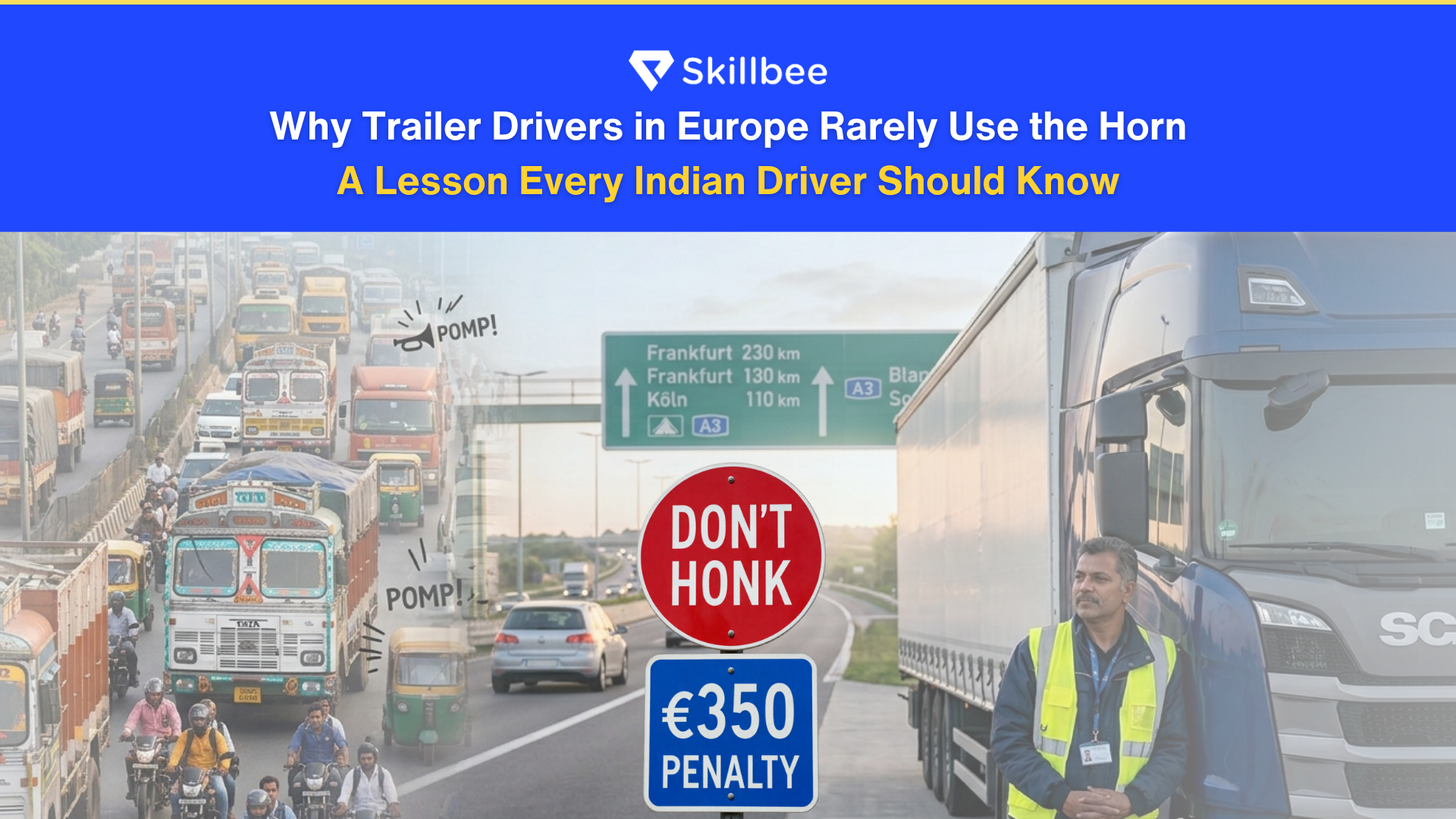
If you’ve spent years driving on Indian roads, you’re familiar with the constant sound of vehicle horns. From busy city streets to crowded highways, honking is often used to signal presence, request space, or indicate overtaking intentions. However, for Indian trailer drivers moving to Europe, one of the biggest surprises is how quiet the roads are. In many European countries, horns are used only in situations involving immediate danger. Instead, drivers rely on lane discipline, indicators, safe following distances, and mutual respect to communicate on the road. This reflects a different driving culture built on patience, anticipation, and professionalism. Understanding these differences can help Indian trailer drivers adapt more quickly and succeed in their European driving careers.
Why Honking Is So Common on Indian Roads

To understand why European roads feel so different, it is important to first understand the driving environment in India.
India has one of the most dynamic and complex traffic systems in the world. On a single road, drivers often share space with cars, trucks, buses, motorcycles, bicycles, pedestrians, street vendors, and even animals. Combined with high traffic density in cities and on major highways, this creates situations where drivers constantly need to make others aware of their presence.
As a result, the horn has evolved beyond its original purpose of warning about danger. For many drivers, it has become a communication tool used to indicate overtaking, request space, alert slower vehicles, or simply announce that a vehicle is approaching.
Commercial vehicles have historically played a major role in this culture. For decades, trucks across India displayed the famous phrase “Horn Please” on their rear panels, encouraging following vehicles to honk before overtaking. Although road conditions and regulations have changed over time, this habit has remained deeply embedded in Indian driving culture.
Many drivers use the horn instinctively, often without even realizing it. In heavy traffic, honking is frequently seen as a way to manage movement and navigate congested roads. What began as a safety measure has gradually become a routine part of everyday driving.
For Indian trailer drivers, this behaviour feels completely normal. However, drivers preparing for a career in Europe should understand that the role of the horn is viewed very differently there. On European roads, excessive honking is generally unnecessary because traffic systems are designed around predictability, discipline, and clear road communication.
How Europe Views the Use of Vehicle Horns

For many Indian trailer drivers arriving in Europe, one of the most noticeable differences is how rarely drivers use their horns. While the horn is commonly used as a communication tool on Indian roads, European driving culture treats it very differently.
In most European countries, the horn is primarily intended as a safety device rather than a method of everyday communication. Drivers typically use it only when there is an immediate risk of an accident or when they need to warn another road user of a potential danger. Outside of such situations, unnecessary honking is generally avoided.
Excessive use of the horn can be seen as disruptive, impatient, or discourteous. In many cities and residential neighbourhoods, noise pollution is taken seriously, and local regulations often discourage unnecessary honking, especially during nighttime hours. As a result, roads tend to be much quieter compared to what many Indian drivers are accustomed to.
Instead of relying on horns, European drivers communicate through predictable and responsible driving behaviour. Proper use of indicators, maintaining lane discipline, respecting safe following distances, and following traffic signs allow road users to understand each other’s intentions without the need for constant audible signals.
For professional trailer drivers, this approach creates a calmer and more organized driving environment. Rather than reacting to traffic through frequent horn use, drivers are expected to anticipate situations in advance and make their intentions clear through correct road practices. This emphasis on discipline and planning is one of the key reasons why European roads often feel more structured and less stressful to navigate.
Understanding this difference is important for Indian drivers planning to work in Europe. Adapting to local driving expectations not only helps ensure compliance with road rules but also demonstrates the professionalism that European employers value in commercial vehicle drivers.
How Trailer Drivers Communicate on European Roads Without Constant Honking

One question many Indian trailer drivers have before moving to Europe is: If drivers rarely use the horn, how do they communicate with other road users?
The answer lies in a driving culture built around clear communication, planning, and predictability. Instead of relying on the horn, European drivers use a combination of road discipline and standardized driving practices to make their intentions known.
Proper Use of Indicators: Indicators play a crucial role in European traffic. Whether changing lanes, overtaking, merging onto a highway, or preparing to turn, drivers are expected to signal their intentions well in advance.
For trailer drivers, early signalling gives surrounding vehicles enough time to react safely. It helps traffic flow smoothly and reduces the likelihood of sudden braking or unexpected manoeuvres. In many situations, a properly timed indicator communicates far more effectively than a horn ever could.
Maintaining a Safe Following Distance: Another key aspect of communication on European roads is maintaining adequate space between vehicles. Trailer drivers are trained to keep safe following distances that allow enough time to react to changing traffic conditions.
When drivers leave sufficient space, there is less need for sudden warnings, aggressive braking, or last-second decisions. This creates a safer environment for everyone on the road and helps prevent misunderstandings between drivers.
Predictable Driving Behaviour: European roads operate on the principle that drivers should be able to anticipate each other’s actions. Sudden lane changes, abrupt braking, or unexpected movements are discouraged because they make traffic less predictable.
Professional trailer drivers are expected to drive smoothly and consistently, allowing other road users to understand what they are likely to do next. When everyone follows predictable driving patterns, the need for horns naturally decreases because intentions are already clear.
Following Traffic Rules and Road Signs: Road signs, lane markings, traffic signals, and regulations form the foundation of communication on European roads. Drivers are expected to observe and follow these systems carefully rather than relying on verbal or audible signals.
For trailer drivers, this means paying close attention to speed limits, lane restrictions, weight regulations, directional signs, and highway guidance systems. Because most road users follow the same rules, traffic becomes more organized and easier to navigate.
A Professional Approach to Driving: For Indian trailer drivers, adapting to this style of communication may take some time. However, many drivers find that once they become familiar with the system, driving becomes less stressful and more efficient. By relying on indicators, safe distances, predictable behaviour, and road rules instead of constant horn use, European drivers create a quieter and safer driving environment that benefits everyone on the road.
What Indian Trailer Drivers Usually Notice During Their First Weeks in Europe

For many Indian trailer drivers, the first few weeks of driving in Europe can feel very different from what they have experienced back home. While the roads, vehicles, and regulations may require some adjustment, it is often the overall driving culture that leaves the biggest impression.
Quieter Roads and Highways: One of the first things drivers notice is the lack of constant honking. Even on busy roads and highways, traffic tends to be much quieter. Horns are rarely used unless there is a genuine safety concern, creating a calmer driving environment. For drivers who are accustomed to the sounds of busy Indian roads, this change can be surprising at first but often becomes one of the most appreciated aspects of driving in Europe.
Less Aggressive Driving Behavior: European drivers generally place a strong emphasis on patience and road courtesy. Sudden lane changes, unnecessary overtaking, and aggressive driving behaviors are less common. Instead of trying to force their way through traffic, most drivers follow established road rules and allow traffic to move in an orderly manner.
Greater Respect for Lane Discipline: Lane discipline is another noticeable difference. Drivers are expected to remain in their designated lanes and change lanes only when necessary and safe to do so. This creates a more predictable traffic flow, making it easier for trailer drivers to anticipate the actions of surrounding vehicles and plan their movements accordingly.
Drivers Rarely Compete for Road Space: On many Indian roads, drivers often need to constantly negotiate for space due to congestion and mixed traffic conditions. In Europe, road users are generally more willing to give way when required and respect the right of way. As a result, drivers spend less time competing for space and more time focusing on safe and efficient driving.
More Structured Traffic Flow: Even in large cities and busy transport corridors, traffic often feels more organized. Clear road markings, effective signage, strict adherence to regulations, and disciplined driving habits help keep vehicles moving smoothly. This structured approach is particularly beneficial for trailer drivers, who operate larger vehicles and require more space and planning to manoeuvre safely.
An Adjustment That Becomes an Advantage: While adapting to a new driving culture can take time, many Indian trailer drivers find that these differences make their work easier in the long run. Quieter roads, predictable traffic behaviour, and a greater emphasis on discipline contribute to a safer and more professional driving environment. Understanding and embracing these practices can help drivers settle into their new roles more quickly and build successful careers on European roads.
Why This Matters for Professional Trailer Drivers
For Indian drivers planning to build a career in Europe, understanding the local driving culture is about more than simply following traffic laws. European transport companies place a strong emphasis on professionalism, safety, and responsible driving behavior. Adapting to these expectations can play an important role in a driver’s long-term success.
Improved Safety: One of the biggest benefits of reduced horn usage is a safer driving environment. Constant noise can become a distraction, especially during long hours on the road. When drivers rely on proper signaling, lane discipline, and safe driving practices instead of frequent honking, they can focus more effectively on traffic conditions and potential hazards.
For trailer drivers operating large commercial vehicles, maintaining full awareness of the road is critical. A calmer driving environment allows drivers to make better decisions and react appropriately to changing situations.
Building a Professional Image: In Europe, disciplined driving habits are often seen as a reflection of a driver’s professionalism. Employers expect commercial vehicle operators to follow regulations, communicate clearly through proper driving techniques, and demonstrate patience on the road.
Drivers who adapt to these standards not only create a positive impression but also show that they are capable of working within European transport systems. This professionalism can contribute to stronger relationships with employers, colleagues, and clients.
Better Concentration During Long Journeys: Trailer drivers frequently spend many hours behind the wheel. In a quieter and more organized traffic environment, drivers can devote their attention to route planning, vehicle performance, road conditions, and safety procedures rather than reacting to constant noise and unpredictable traffic behaviour.
Improved concentration can reduce stress, minimize fatigue, and contribute to a more comfortable driving experience, particularly during long-distance international routes.
Easier Integration Into European Workplaces: Driving in Europe involves more than operating a vehicle—it also means adapting to local workplace expectations and industry standards. Understanding road etiquette, respecting traffic regulations, and adopting disciplined driving habits help drivers integrate more smoothly into their new working environment.
Employers value drivers who can quickly adjust to local practices and represent their company professionally on the road. By embracing European driving standards from the beginning, Indian trailer drivers can build confidence, earn trust, and position themselves for long-term career success.
A Skill That Goes Beyond Driving: The ability to drive safely is essential, but successful professional drivers also understand how to operate within the culture of the roads they use every day. Learning when not to use the horn, communicating through proper driving techniques, and respecting the expectations of other road users are all part of becoming a well-rounded professional trailer driver in Europe.
Common Habits Indian Drivers Should Adjust Before Moving to Europe

Moving to Europe as a professional trailer driver involves more than obtaining the necessary documents and learning new routes. It also requires adapting to a different driving culture. While Indian drivers are highly skilled at navigating challenging traffic conditions, some everyday habits may need adjustment to align with European road standards and employer expectations.
Reduce Unnecessary Horn Usage: In India, using the horn frequently is often considered normal and practical due to traffic conditions. In Europe, however, the horn is generally reserved for situations involving immediate danger or safety concerns. Drivers who avoid unnecessary honking are viewed as more professional and respectful of local road etiquette.
Practice Consistent Lane Discipline: Lane discipline is taken very seriously across Europe. Drivers are expected to stay within their designated lanes and change lanes only when necessary and safe. Frequent weaving between lanes or occupying the wrong lane for extended periods can disrupt traffic flow and create safety risks.
For trailer drivers operating large vehicles, maintaining proper lane position is particularly important for road safety and smooth traffic movement.
Use Indicators Early and Clearly: Indicators are one of the primary ways drivers communicate their intentions on European roads. Whether changing lanes, overtaking, exiting a highway, or making a turn, signals should be used well in advance to give other road users sufficient time to react.
A well-timed indicator demonstrates professionalism and helps maintain predictable traffic flow.
Maintain Safe Following Distances: European drivers generally keep greater distances between vehicles than many drivers are accustomed to in congested traffic environments. For trailer drivers, maintaining adequate space is essential because larger vehicles require more time and distance to stop safely.
Keeping a safe following distance reduces the likelihood of sudden braking and helps create a safer road environment for everyone.
Anticipate Traffic Conditions: Rather than reacting at the last moment, European driving culture encourages drivers to anticipate potential situations before they develop. This includes observing traffic patterns, monitoring road signs, planning lane changes early, and adjusting speed when necessary.
Professional trailer drivers who develop strong anticipation skills are better equipped to handle changing road conditions safely and efficiently.
Respect Noise Regulations and Local Communities: Many European cities and residential areas have strict expectations regarding noise levels. Excessive horn use, unnecessary engine revving, or other avoidable noise can be viewed negatively by both authorities and local residents.
Understanding and respecting these expectations demonstrates professionalism and helps drivers integrate more successfully into their new environment.
Small Adjustments, Big Benefits: For most Indian trailer drivers, these changes are not about learning entirely new skills but about adapting existing driving experience to a different road culture. By embracing disciplined driving habits, drivers can improve safety, meet employer expectations, and enjoy a smoother transition to life and work in Europe. These adjustments may seem small at first, but they can make a significant difference in building a successful international driving career.
The Bigger Difference: Driving Culture, Not Just Driving Rules

When preparing for a trailer driving career in Europe, many drivers focus on learning traffic regulations, understanding road signs, and familiarizing themselves with vehicle requirements. While these are all important, adapting to European roads involves something much bigger than simply following a new set of rules—it requires understanding a different driving culture.
Success Requires More Than Technical Driving Skills
Many Indian trailer drivers already possess excellent vehicle-handling skills developed through years of experience on some of the world’s most challenging roads. However, European employers are often looking for more than the ability to operate a heavy vehicle safely.
They also value drivers who can demonstrate professionalism, responsibility, and an understanding of how commercial transport operates within European road systems. Technical skills may help secure a job, but adapting to local driving expectations can help drivers build a long and successful career.
Professionalism Goes Beyond the Driver’s Seat
In Europe, professionalism is reflected not only in how a driver handles a vehicle but also in how they interact with other road users. Patience, courtesy, discipline, and respect for traffic regulations are considered essential qualities of a professional driver.
This means avoiding aggressive driving behavior, planning maneuvers in advance, respecting speed limits, maintaining safe following distances, and communicating intentions clearly through indicators rather than relying on the horn. These habits contribute to a safer and more efficient transport environment for everyone.
Understanding Road Etiquette Matters
Every country has its own unwritten rules and expectations when it comes to driving. In Europe, road etiquette plays an important role in maintaining order and safety on busy highways and city roads.
Simple practices such as allowing other vehicles to merge, staying in the correct lane, respecting rest periods, and following traffic flow expectations are often viewed as signs of a skilled and experienced driver. Learning these cultural norms can make everyday driving smoother and help drivers feel more confident in their new environment.
Easier Adaptation, Better Career Opportunities
Drivers who understand and embrace European driving culture often adapt more quickly to their new workplaces. Employers appreciate drivers who can integrate seamlessly into existing operations, follow procedures consistently, and represent the company professionally on the road.
This ability to adapt can lead to stronger job performance, greater trust from employers, and improved long-term career prospects. In a competitive transport industry, professionalism and cultural awareness can be just as valuable as driving experience.
A Mindset Shift for Long-Term Success
Ultimately, the transition from Indian roads to European roads is not just about changing driving habits—it’s about adopting a new mindset. The most successful trailer drivers understand that professionalism includes attitude, patience, safety awareness, and respect for the driving culture around them.
By combining their existing skills with an understanding of European road etiquette and expectations, Indian trailer drivers can make the transition smoother, perform more effectively, and build rewarding careers across Europe.
Conclusion
For Indian trailer drivers, adapting to life and work in Europe is about more than obtaining the right licence or learning new traffic regulations. It also means understanding a driving culture that values patience, discipline, safety, and respect for other road users.
The difference in horn usage is a simple but powerful example of this cultural shift. On European roads, drivers are expected to communicate through proper signaling, lane discipline, safe following distances, and predictable driving behavior rather than relying on constant honking. These practices help create a quieter, safer, and more organized driving environment for everyone.
For professional trailer drivers, adapting to these expectations can make the transition to Europe smoother and help build a strong reputation with employers. Drivers who combine their existing experience with an understanding of European road etiquette are often better equipped to succeed in the transport industry.
At Skillbee, we support Indian trailer drivers who want to build their careers in Europe by connecting them with verified job opportunities and assisting them throughout the recruitment process. We also help candidates with documentation requirements and provide English language training to improve communication skills and workplace readiness.
Understanding how to drive in Europe is important. Understanding how Europeans drive is what truly helps professional drivers succeed.
 +91 73 6009 6009 (India)
 contact@skillbee.com
Leave a Reply